

EMBEDDED SYSTEMS
Embedded systems or “resident software systems” encompass a vast and growing number of computers. These include the multiple processors, microcontrollers, and specialized computers that control many aspects of modern life, from an “intelligent” speed-variable drill to the powerful array of dedicated processors that operate a combined-cycle thermal power plant. These computers are far more numerous than PCs or laptops.
In many cases, these are extremely cost-effective computers (microcontrollers) that contain, within a single chip, working memory (RAM), program memory (ROM or FLASH), and input/output subsystems (I/O). Users rarely know about or modify the components or program of an embedded system, and it is generally designed to be as unobtrusive as possible. Likewise, a large number of processors interact in a modern car, controlling everything from fuel injection and mixture to the interior cabin temperature. Increasingly, the challenge in complex systems lies in the reliable and consistent movement of information between controllers, with significant efforts being directed toward microcontroller networks (CAN and others) for industrial applications.
Many problems, especially those involving repetitive sequences in machines, mechanisms, or control panels, can be solved using PLCs or Programmable Logic Controllers. These devices are, in turn, embedded systems with configurable I/O, and their logic can be programmed by the user. However, the range of applications for embedded systems continues to grow permanently, recently including AI and Edge Computing. These systems can prove to be highly advantageous in terms of cost, size, and power consumption across a great variety of problems.
Some solutions offered at L&R Ing.:
- ITTIA Partnership — STM32H573DK + METEO + ThreadX/FreeRTOS with ITTIA-DB Lite
- DIN RS485 Boards
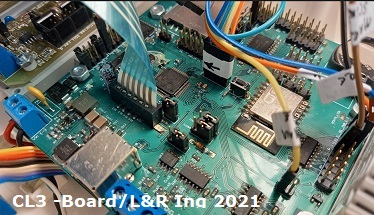
- CL3bm1 CPU and M5E I/O Board — Advances
- CL2bm1 System — AVR ATMega CPU + M4/E Expansion Board with Cypress PSoC
Legacy Solutions
- OpenDLogger Data Acquisition Project
- PC/104 Development, Software and Complete Systems
- DOS Stamp Development Boards
- 8051 Microcontroller Developments